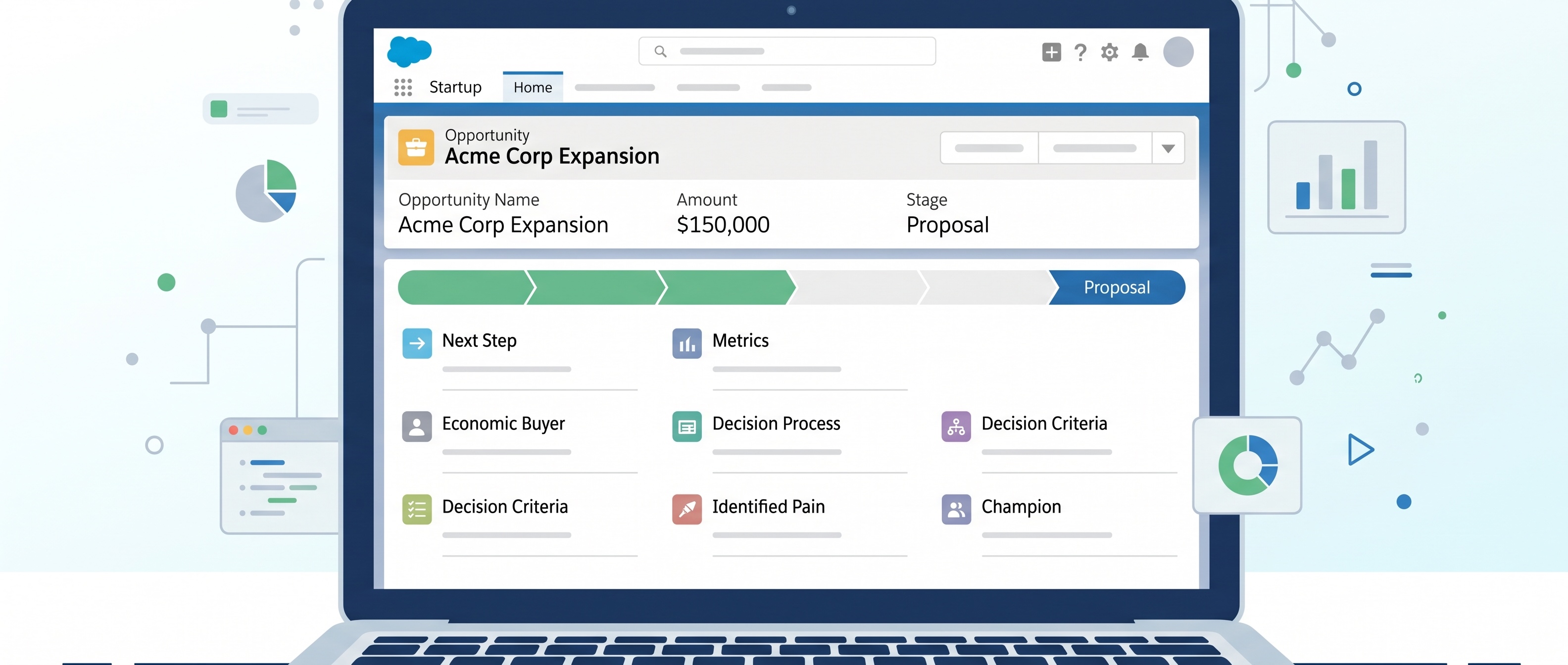
AI in Sales Enablement: 6 Key Use Cases + 5 Best Tools in 2025
AI sales enablement is transforming how sales teams operate, improving productivity, personalization, and revenue growth.
With the rise of artificial intelligence in business workflows, sales organizations are finding smarter ways to train, support, and empower their reps.
From guided selling to automated content recommendations, AI is no longer a futuristic concept; rather, it is an everyday tool.
In this article, we’ll explore the benefits, use cases, and the best platforms available in 2025 for AI in sales enablement, including innovative solutions like HeySam that solve critical adoption and training challenges.
TL;DR
- AI sales enablement boosts efficiency, personalization, and ROI.
- Use cases include content recommendations, lead scoring, guided selling, and training support.
- Choosing the right platform depends on budget, integrations, and specific team needs.
- The future of sales enablement and AI will revolve around generative AI, predictive analytics, and hyper-personalization.
The Power of AI for Sales Enablement
Artificial intelligence sales enablement is about creating smarter, data-driven sales ecosystems. The best AI tools for sales bridge the gap between sales reps and customers by delivering insights, recommendations, and support at the right moment.
Sales enablement and AI together reduce guesswork, streamline content use, and help reps close more deals faster.
Platforms like HeySam also address one of the biggest challenges in adoption: ensuring that reps not only use AI tools but also integrate them seamlessly into their workflow, eliminating wasted investment in underutilized platforms.
4 Benefits of AI in Sales Enablement
There are numerous advantages to using AI in sales enablement. Let’s take a look at four of the main benefits.
1. Enhanced Buyer Experience
AI enhances the buyer experience by delivering personalized content and recommendations tailored to individual prospects.
Instead of generic outreach, using AI for sales prospecting enables reps to provide highly relevant materials that align with a buyer’s interests and stage in the funnel.
This personalization builds trust and increases the likelihood of conversions.
2. AI Role-Play and Simulation Training
AI role-play tools create realistic practice environments where sales reps can engage with virtual buyers. Instead of analyzing past calls, these systems let reps actively practice objection handling, messaging, and negotiation in real time.
AI simulates various buyer personas and scenarios, providing instant, personalized feedback on tone, structure, and delivery.
This type of interactive learning accelerates skill development and helps new hires ramp up faster by building confidence through repetition and immediate coaching.
3. Smarter Content Usage
AI identifies which pieces of content resonate most with prospects at each stage of the buyer journey.
It suggests case studies, presentations, or videos that have historically driven engagement.
Reps save time searching for content and instead deliver the most effective assets with confidence.
4. Faster Hiring and Onboarding at Scale
AI enables companies to hire and ramp new sales reps faster than ever before. Instead of being limited by the enablement team’s bandwidth, AI-driven systems deliver personalized onboarding paths, interactive simulations, and real-time coaching at scale.
New hires gain access to the same quality of guidance and practice as top performers, without requiring one-on-one sessions for every scenario.
This approach shortens ramp time, reduces dependency on manual training, and helps teams grow efficiently without compromising quality.
How Is AI Used in Sales Enablement? 6 Use Cases
Now let’s look at six real-life examples of how AI can be used in sales enablement.
1. Virtual Sales Assistants
AI-powered sales assistants now function as real-time copilots during customer conversations, supporting reps with instant data retrieval and contextual suggestions. During a live call, the assistant might surface relevant pricing details, competitor comparisons, or answers to technical questions based on what the buyer says.
These sales automation AI tools also log meeting notes, summarize action items, and update CRM records automatically, freeing reps to stay focused on relationship-building.
For example, a rep can ask, “What’s our standard SLA for enterprise customers?” mid-call, and the AI will provide the correct information within seconds.
By combining knowledge retrieval, automation, and contextual intelligence, virtual assistants ensure that every interaction feels informed, confident, and personalized.
2. AI Role-Play for Skill Development
AI role-play systems now let sales reps and SDRs practice complex scenarios with adaptive virtual buyers that mirror real-world personalities, industries, and objections. Instead of static scripts, these simulations adjust dynamically to the rep’s responses, tone, and confidence level, creating a realistic learning loop.
Reps can test everything from cold openers to deep discovery conversations, receiving instant feedback on structure, pacing, and empathy.
This approach transforms role-play from an occasional team exercise into a scalable, on-demand coaching experience that drives measurable skill gains across the organization.
3. Automated Content Creation
Generative AI enables sales teams to produce customized collateral in seconds without waiting for marketing cycles or design resources. Reps can instantly generate email sequences, one-pagers, or proposal summaries tailored to a buyer’s industry, persona, and pain points.
The AI ensures brand consistency by pulling from approved templates and tone guidelines while still personalizing for each account.
For example, a rep targeting a SaaS CFO can prompt the system to draft an ROI-focused email sequence using the latest case studies and metrics. This level of autonomy reduces content bottlenecks, keeps messaging on-brand, and allows sellers to maintain momentum in fast-moving deal cycles.
4. Content Recommendations
AI-driven enablement platforms analyze CRM data, engagement metrics, and buyer behavior to suggest exactly which content performs best at each stage of the funnel. Rather than relying on intuition, reps receive evidence-based recommendations—for instance, sending a technical whitepaper to an engineering contact and a case study to the CFO.
The result is higher content utilization, stronger buyer engagement, and data-backed insight into which materials truly move deals forward.
5. Guided Selling
Guided selling applies AI to recommend next-best actions that keep deals on track and ensure messaging consistency across teams. The system might alert a rep to reach out to a prospect who recently engaged with new content or suggest a product demo when an account hits a readiness threshold.
AI also tailors suggestions based on historical data, account size, and deal stage, helping new reps emulate top performers faster.
For instance, an AI prompt inside the CRM might recommend: “Follow up within 24 hours using this value-based messaging. Similar deals had a 32% higher close rate.”
By turning playbooks into actionable, data-driven guidance, guided selling increases deal velocity and keeps every rep aligned with proven strategies.
6. Sales Training and Onboarding
AI transforms onboarding into a personalized, adaptive learning journey rather than a one-size-fits-all training plan. New hires receive interactive learning paths with quizzes, video practice, and feedback tailored to their role and performance gaps.
As reps progress, AI dynamically adjusts difficulty and focus, spending more time reinforcing weak areas like objection handling or discovery questioning.
For example, a new AE might complete a role-play exercise where the AI grades empathy and product accuracy, while an experienced rep might focus on advanced negotiation tactics.
This data-driven training approach reduces ramp time, improves retention, and ensures new hires start contributing faster.
5 Best AI Sales Enablement Tools to Try in 2025
Here are our recommendations for the best AI sales enablement tools available in 2025.
1. HeySam
HeySam solves the common challenge that no amount of enablement content and workshops can paper over the fact that reps learn best when they get just-in-time enablement in the context of a sales call.
Sam provides a live call enablement assistant that detects customer questions and privately provides answers and nudges right in the middle of a sales call.
This just-in-time enablement complements (but does not replace) the "classroom-style" enablement reps typically go through.
The end result is sales reps who know the product, positioning, and objection handling like the back of their hands.
2. Hyperbound
Hyperbound is an AI-powered sales training platform explicitly designed for SDR teams. It helps reps practice cold outreach, objection handling, and prospecting conversations in realistic, adaptive simulations.
Instead of wasting live opportunities to learn, SDRs can rehearse dozens of call scenarios and get instant feedback on tone, pacing, and delivery.
Hyperbound addresses one of the biggest bottlenecks in sales development: the lack of scalable, consistent practice time, by allowing teams to build skills faster without pulling managers or peers away from live selling.
3. Second Nature
Second Nature uses conversational AI to coach sales reps through lifelike role-play scenarios that mirror real buyer interactions. The platform acts as a “virtual buyer,” challenging reps with questions, objections, and curveballs while providing detailed feedback on confidence, message accuracy, and delivery.
This approach solves the common pain of fragmented, inconsistent coaching programs that can’t scale across large teams.
With Second Nature, companies can reinforce enablement playbooks through automated practice, ensuring every rep is fluent, confident, and ready for real conversations.
4. Seismic
Seismic is a leading sales enablement platform that uses AI to streamline content management, personalization, and distribution at scale. It helps marketing and enablement teams ensure reps always have access to the most relevant, up-to-date materials for every stage of the buyer journey.
With built-in analytics, Seismic tracks which assets drive engagement and revenue, turning content performance into measurable business insight.
The platform solves the common pain of content chaos where sellers waste time searching for materials or send outdated decks by centralizing resources, enforcing brand consistency, and automating content delivery based on deal context.
5. Highspot
Highspot empowers sales teams to find, customize, and deliver the right content at the right time using AI-driven recommendations. Its guided selling framework maps enablement assets to each stage of the sales cycle, helping reps quickly understand what to use and why.
The platform also provides detailed engagement analytics, showing how buyers interact with shared materials, enabling enablement teams to refine their strategy continuously.
Highspot addresses a key challenge in enablement: ensuring that great content actually gets used.
By embedding insights into rep workflows, it drives adoption, consistency, and stronger buyer conversations.
The Future of AI and Sales Enablement
The future of AI in sales enablement lies in hyper-personalization, predictive analytics, and generative AI. Sales teams will use AI to create content instantly, predict buying behavior with precision, and deliver tailored engagement at scale.
Generative AI will make it possible for reps to produce custom collateral for every account in minutes. Predictive analytics will provide unmatched visibility into pipeline health, enabling proactive strategies rather than reactive responses.
Virtual assistants will evolve into real-time copilots, helping reps handle objections, surface competitive intelligence, and guide conversations.
Perhaps most importantly, adoption-focused platforms like HeySam will ensure these innovations are fully utilized, solving the problem of tool fatigue and driving consistent performance across sales teams.
Companies that embrace these advancements will achieve faster sales cycles, higher win rates, and a competitive advantage that compounds over time.
Check Out HeySam’s AI Sales Engineer
Ready to see how HeySam transforms sales performance in real time?
Book a demo to experience how live call enablement helps your reps handle objections, surface answers instantly, and close deals with confidence.
Instead of relying on underused tools or forgotten playbooks, HeySam delivers guidance where it matters most: during the conversation.
Discover how your team can sell smarter and faster with AI-powered sales enablement built for the way reps actually work.
Key Takeaways
AI sales enablement is reshaping how modern sales teams operate by automating repetitive tasks, delivering personalized buyer experiences, and empowering sellers to become true subject matter experts who build trust and credibility throughout the sales process.
Choosing the right tool requires clarity on goals, integrations, and budget, but the payoff is significant in productivity and revenue growth.
As generative AI, predictive analytics, and hyper-personalization become standard, sales organizations that adopt these tools early will remain ahead of the competition.
FAQs
How does AI work in sales enablement platforms?
AI in sales enablement platforms works by analyzing sales data, customer interactions, and content usage patterns. It then delivers personalized recommendations, coaching insights, and predictive forecasts that help reps close more deals efficiently.
How to implement AI in your sales enablement strategy?
Start by defining goals, such as improving training or boosting win rates. Then, select a platform that integrates with your existing tools. Pilot the AI solution with a small team before rolling it out organization-wide.
Will AI replace enablement roles?
Yes and no. AI will take over parts of the enablement function by automating tasks such as content creation, training simulations, and performance analysis, where machines deliver speed and scale.
However, enablement must remain a human-led program focused on driving business outcomes, aligning teams, and shaping behavior.
While AI can enhance how enablement is executed, it cannot be accountable for strategy, culture, or results. Human leadership is still essential to interpret data, set priorities, and ensure that technology supports the organization’s goals.
What types of AI are used in sales enablement?
AI is now central to modern sales enablement, powering everything from just-in-time guidance during calls to personalized content creation and realistic AI role-play for training.
Sales enablement platforms typically combine machine learning, natural language processing, predictive analytics, and generative AI.
Together, these technologies analyze large datasets to surface insights, create tailored content, and recommend the next best actions that help reps engage buyers more effectively.
How is generative AI changing sales enablement?
Generative AI enables instant creation of sales content like email templates, scripts, and collateral. It also personalizes messaging at scale, ensuring that every customer touchpoint feels relevant and targeted.
What are the risks or challenges of AI in sales enablement?
Challenges include data privacy, potential over-reliance on automation, and change management within sales teams. Companies must ensure proper adoption and balance AI with human judgment.
What metrics improve when you use AI for sales enablement?
Commonly improved metrics include lead conversion rates, win rates, average deal size, ramp time, and sales cycle length. AI also increases CRM data accuracy and rep productivity.
What’s the ROI of AI sales enablement?
ROI comes from reduced time spent on admin tasks, better lead prioritization, higher win rates, and improved rep performance. Most companies see significant return within the first year of implementation.
Isn’t an AI sales enablement platform just another tool your sales reps will ignore?
Unlike traditional tools, AI platforms integrate into daily workflows. They deliver actionable insights at the moment of need, making them highly relevant. Reps adopt these tools because they simplify selling and improve results.