CRM Hygiene: 4 Ways to Fix Manual Data Entry
Every sales team—yes, including yours—has the exact same problem with CRMs: no one has the time to update it.
We do the bare minimum. We all create accounts and opps, enter amounts and update opp stages. That’s about it for most sales teams.
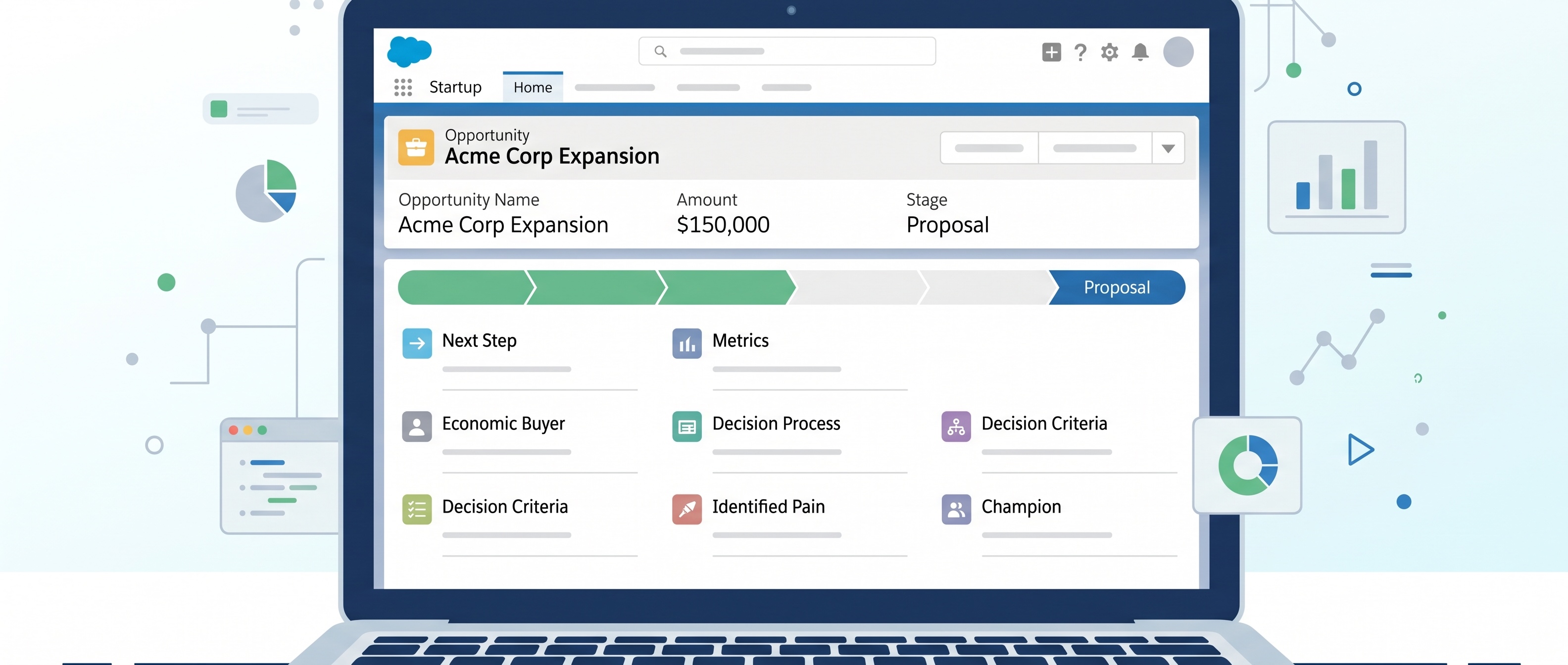
That field that captures the "Economic Buyer"? Empty. The one for their tech stack? Crickets. Next step? Untouched in a month.
This is the plague of “manual data entry”.
Here are four ways different companies have tried solving this problem.
Prefer to watch instead? This 5-minute video covers everything in this article and more.
1. The “Modern” CRM approach (HubSpot, Salesforce, Attio)
If you know this problem and I know this problem, every CRM company knows it too. And it's a particularly painful one for them because in a world of manual data entry, they aren't selling a CRM. They're selling a database nobody fills in.
With the rise of LLMs, CRM companies have taken it upon themselves to fill this gap. They integrate with Zoom, record the call, and automatically update the opportunity with data extracted by an LLM. MEDDPICC fields? Check. Tech stack? Check. Next steps? Check.
HubSpot calls these "smart properties": prompts you write that tell the AI what to extract and how to populate each field. Attio does the same. So does Salesforce.
The promise of this approach: your CRM updates itself. What’s simpler than that?
The problem: CRM companies are not AI companies. Data extraction is not their core competency, and their accuracy reflects that. Hallucinations are common. Worse, there's no human in the loop. They update fields automatically, errors included.
You go from an empty CRM to one filled with half truths.
Bottom line: you get more data entering your CRM, but it’s hard to trust this data.
2. The Gong Approach
Unlike CRM giants, Gong has spent over a decade extracting signal from noise in sales calls. They know that even the best AI can misread the nuance in a sales conversation. So their approach centers on human review. Only approved data gets into your CRM.
After each call, Gong compares what happened to what's in your CRM and surfaces suggested field-level updates. The rep accepts, edits, or rejects each one before anything gets pushed.
The accuracy is genuinely good. That's the upside.
The downside: Gong expects reps to log in regularly to review those suggestions. Most don't. They open Gong to watch a call recording or check the deal board, not to work through a queue of field suggestions. So the suggestions pile up, unapproved, and the CRM stays thin.
High-quality data that never gets accepted is the same as no data.
Bottom line: High accuracy, low adoption. The human-in-the-loop exists on paper.
3. The “Live Call” Approach (Winn.ai)
Winn.ai starts from a smarter premise: if reps never ask the right questions, the AI never gets the right answers to extract. So Winn nudges reps during calls with a discovery checklist that tracks which playbook questions have been covered and suggests what to ask next.
They also solve Gong's adoption problem by surfacing suggested CRM updates in real time, right on screen during the call. Economic buyer identified mid-conversation? It appears immediately. Rep accepts, edits, or rejects it while the information is still fresh.
The logic is sound. The execution is where it breaks.
Most reps won't review CRM suggestions mid-call. It’s distracting. Interrupting a live sales conversation to approve a field update is a lopsided cost-benefit tradeoff. The reps who try it aren't fully present. The ones who don't ignore it entirely.
Bottom line: Strong accuracy and good intent, but the in-call review is right insight at the wrong moment.
4. The HeySam approach
At HeySam, we looked at all three approaches and asked a simple question: where do reps actually spend their time?
In Slack.
So we built around that. We ingest signals from everywhere—calls, emails, and Slack deal rooms. After each call, we review signals from every channel to suggest field-level updates that we send to the rep in Slack for review. They accept, edit, or reject without opening a new tool. Takes about a minute per opp.
We also run a live discovery checklist during calls, nudging reps to ask the right questions without cluttering their screen with extraction suggestions.
To be fair, there’s a downside to our approach. If a rep is running 7-8 calls a day, the Slack suggestions can pile up fast. That's the honest cost of thorough CRM hygiene. We handle it partly by letting teams set a review window. If reps don’t review suggestions within that window, Sam auto-applies them to the CRM.
Bottom line: High accuracy, high adoption potential.
How the Four Approaches Stack Up
The accuracy problem is largely solved across the board. The unsolved problem is getting reps to actually review suggestions—without disrupting how they already work.
That's the only metric that ultimately matters.
FAQs
Why don't sales reps update CRM fields consistently?
It is manual, time-consuming, and sits outside their natural workflow. Reps prioritize selling over data entry. Fields like economic buyer, tech stack, and decision process stay empty because entering them feels like a tax. Any solution requiring reps to change their behavior will underperform. Effective tools embed into workflows reps already use.
Can AI fully automate CRM updates from sales calls?
Yes, but "fully automated" usually means "unreliable." Approaches from vendors like HubSpot or Salesforce often lack the nuance of a real discovery call. Without a human review step, AI misinterprets conversations and fills your CRM with inaccurate data. You go from an empty CRM to one filled with half-truths. Half-truths are worse for forecasting than empty fields.
Why do CRM suggestions from Gong often go unused?
Reps have to log into a separate tool to review them. Most open Gong to watch recordings or check a deal board. They don't log in to work through a queue of field suggestions. High-quality data that never gets approved is the same as no data.
Is HubSpot's native AI good enough for data hygiene?
Not if you need data you can trust for forecasting or pipeline reviews. The accuracy gap between HubSpot Breeze AI and dedicated intelligence tools is significant. More importantly, it lacks a human review step. Errors compound silently until your data becomes fiction.
What is the most effective way to improve CRM hygiene?
Deliver suggestions in tools reps already use and make the review fast. At HeySam, we send suggested CRM updates to reps in Slack after each call. They accept, edit, or reject in about a minute per opportunity. No new tool to open. No workflow disruption.